 Bumi Abi
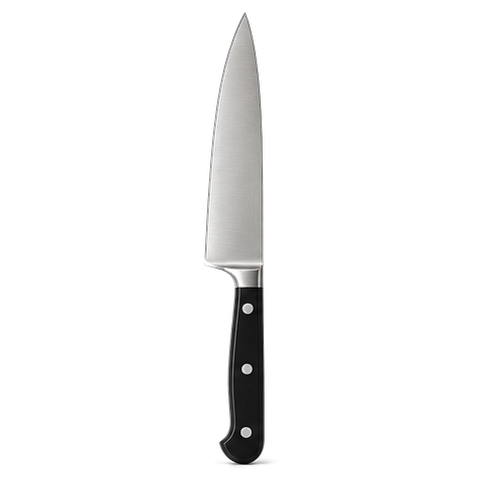
Choose a blade material that fits your habits
The blade material affects how sharp a knife can get and how much care it needs. The two most common types are stainless steel and carbon steel.
- Stainless steel: resists rust, suits busy kitchens where drying is not always immediate.
- Carbon steel: can be sharpened to a very fine edge, but needs to be dried right after washing to prevent rust.
Size and handle
A chef's knife with a blade around 20 cm is the most versatile choice for slicing vegetables, meat, and fruit. A blade that's too long can feel heavy, especially for smaller hands.
- A handle that sits comfortably in your palm reduces fatigue during long prep sessions.
- Tight joins between the blade and handle keep food debris and water out.
- If possible, hold the knife in the shop and check the balance before buying.
How to care for it properly
Most knife damage comes from everyday habits, not from the price of the knife.
- Use wooden or soft plastic cutting boards. Avoid ceramic or glass boards, which dull the edge.
- Hand wash and dry immediately.
- Store on a block, magnetic strip, or in a drawer with a blade guard.
- Hone regularly with a honing rod and sharpen with a whetstone when the edge dulls.
Note: Specifications and prices can change. Always check the product page on Amazon before you buy.
Product picks
Here are a few options to consider, compared by the needs that come up most often.
| Type | Strengths | Keep in mind |
|---|---|---|
| Stainless steel | Rust-resistant, easy to maintain | Edge needs regular upkeep |
| Carbon steel | Very sharp, easy to sharpen | Must be dried right away |
| Ceramic | Very sharp and light | Can chip if dropped |
20 cm stainless steel chef's knife
A practical choice for daily cooking. Check the blade material and warranty.
- Easy to maintain
- Versatile size
- Needs sharpening more often than carbon steel
Double-sided whetstone
Helps keep an edge sharp over the long term.
- More stable sharpness
- Works on many knives
- Takes time to learn
Frequently asked questions
How often should I sharpen my knife?
It depends on how much you cook. For home use, honing with a rod weekly and sharpening every few months is usually enough.
Can I soak my knife in water?
Avoid it. Long soaks can damage wooden handles and speed up rust on some blades.

Loading comments…